
Performance marketing Dubai for retail and services How to choose channels and build a test plan that links to store visits
By Fazal Hussain ·
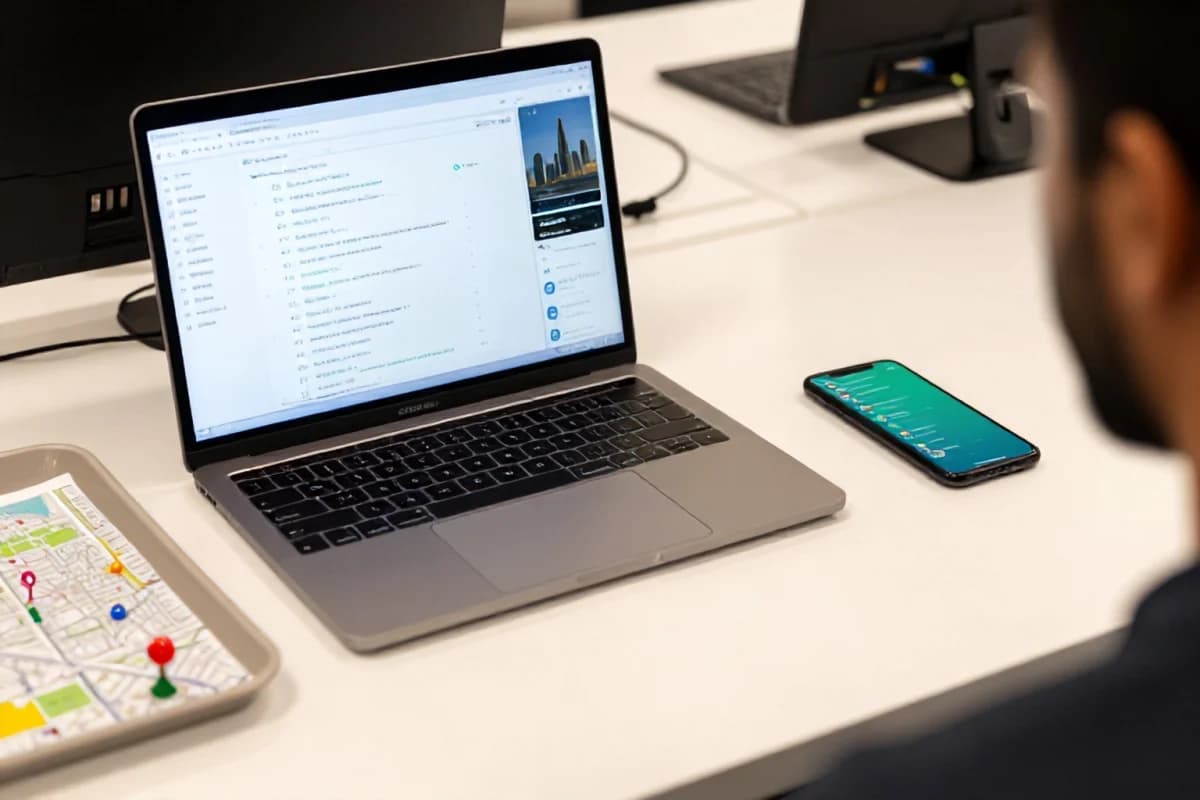
If you need performance marketing Dubai that drives measurable store visits, start by matching channel intent to the way people search and buy locally, then run a short, controlled test plan with strong tracking. Use Google Maps and Search for high-intent discovery, Meta and TikTok for demand capture, and WhatsApp for conversion handoffs, all tied to measurable on-the-ground actions.
Performance marketing Dubai starts with intent mapping, not channel hopping
In Dubai, customers often move quickly between online discovery and offline action. Your job is to design tests that reflect that journey, then compare results on a single decision metric each time.
Before you launch ads, map each channel to a stage:
- High intent: users already looking for a service or store location. Focus on Google Search and Google Maps.
- Problem discovery: customers need education and reassurance. Focus on Meta and TikTok with landing pages and click to WhatsApp.
- Conversion handoff: capturing the “I’m ready” moment. Focus on WhatsApp flows with clear next steps and location context.
- Reactivation: bring back visitors who didn’t book. Use retargeting and offer reminders with strict frequency limits.
Pick one main action per test to avoid misleading results
Most retail and services teams fail because they optimise to the wrong thing. For example, if your real goal is store visits, optimising only for clicks will over-credit expensive traffic. Set a primary action for each test, such as:
- Store visit intent: “Click to call” or “Get directions” from Google Maps
- Qualified contact: WhatsApp message with a structured keyword or service selection
- Booking intent: a completed booking form with location chosen
Then define a single success metric per test, like cost per qualified WhatsApp conversation or cost per “Get directions” event.
Key takeaways
- Match channel choice to intent: Maps and Search for high intent, Meta and TikTok for discovery, WhatsApp for conversion handoff.
- Run controlled tests with one primary action per test, so you can compare results fairly.
- In Dubai, tie online performance to store visits using Google Maps actions plus WhatsApp location tagging and consistent offline follow-up.
- Build measurement in layers: platform events, CRM/WhatsApp outcomes, and store-level confirmation data.
A practical channel selection framework for performance marketing Dubai
Use this “3-layer” framework to decide where to spend first. It keeps budgeting practical while preventing vanity metrics.
Layer 1: Location intent signals (start here if you have branches)
If you have multiple branches, Google Maps and Search usually provide the cleanest link to visits. Create separate location-aware tests:
- Google Maps assets: ensure business info and photos are consistent across branches.
- Location-specific landing pages: each branch should have its own page so ad traffic doesn’t blur intent.
- Offer alignment: if the ad says “same-day appointment,” the landing page and WhatsApp flow must confirm it.
Layer 2: Demand capture (use Meta and TikTok to create demand)
For retail and services, Meta and TikTok are strong for top-of-funnel demand capture, especially when you use creative that shows products, services, staff, and the environment customers recognise in Dubai.
Instead of sending everyone to the homepage, test these destination types:
- Service page with a “Chat on WhatsApp” button
- Branch-specific page when the customer is likely to choose a nearby option
- Short-form lead form only when WhatsApp is not appropriate for your sales cycle
Track which destination converts into WhatsApp conversations and follow-through.
Layer 3: Conversion handoff and qualification (WhatsApp)
WhatsApp often becomes the fastest conversion path in the UAE because it matches how people communicate. To keep performance marketing measurable:
- Start WhatsApp with structured prompts (for example: service selection and preferred branch)
- Log the conversation outcome (qualified, not qualified, no-show, booked)
- Use consistent keywords in ads and landing pages so you can link traffic to outcomes
Test plan for performance marketing Dubai that actually links to visits
Here is a structured test plan you can run without getting lost. It is designed for a typical Dubai retail or services operator who wants to connect online spend to store behaviour.
Step 1: Build your “visit scorecard” before you spend
Create a simple scorecard with 3 columns:
- Online action (for example, “Get directions” on Google Maps or “WhatsApp message sent”)
- Qualified handoff (for example, staff confirms the customer asked for the right service and branch)
- Offline confirmation (for example, appointment booked and attended)
Even if offline confirmation is manual at first, capturing it consistently is what turns performance marketing from a report into a management tool.
Step 2: Launch two concurrent experiments with strict rules
Run two tests at the same time so you don’t confuse seasonality with performance differences:
- Experiment A: High intent capture
- Focus: Google Search and Google Maps intent
- Primary action: “Get directions” or call/booking intent event
- Creative: branch and offer-led (not generic brand-only)
- Experiment B: Demand capture to WhatsApp
- Focus: Meta and/or TikTok to service pages with WhatsApp handoff
- Primary action: WhatsApp conversation with the correct service selection
- Creative: show the service process, product usage, staff, and location familiarity
Rules for both experiments:
- Use one landing destination per ad group
- Keep offers consistent across creatives during the test
- Limit retargeting frequency so it doesn’t inflate results
Step 3: Set a decision threshold that is operational, not theoretical
Decide what “winning” means in a way your operations team can act on. For example:
- If cost per qualified WhatsApp conversation improves but booked visits drop, your qualification rules or follow-up speed may be broken.
- If store visits rise but cost per visit rises too, you may have created demand but with lower quality customers, requiring creative and targeting adjustments.
Step 4: Connect online events to store outcomes (Dubai-specific reality)
In Dubai, many customers will contact you via WhatsApp after seeing an ad. To link performance to visits:
- Tag by branch: when the user selects a branch in WhatsApp, store that selection in your CRM or conversation log.
- Use consistent tracking IDs: include a short campaign identifier in the landing page and WhatsApp entry prompt.
- Confirm speed: measure response time from message received to first reply. Slow replies can reduce visits even when ads perform.
Then review weekly which branches and services convert best, not just which ads get clicks.
An example: a Dubai multi-branch service using a 3-step optimisation loop
Let’s say you run a multi-branch service business in Dubai with bilingual English and Arabic content. Your objective is store visits via appointments and WhatsApp enquiries.
Initial setup (week 1)
- Google Maps and Search test: run location-aware ads to branch pages; measure “Get directions” and call intent to estimate visit demand.
- Meta and TikTok test: run service-focused creative to branch pages with WhatsApp button; measure WhatsApp conversations and correct service selection.
- WhatsApp qualification: add a quick structured flow that captures service and branch preference.
Optimisation loop (week 2)
- Pause creatives that generate high message volume but low qualified selections.
- Shift budget toward branches where WhatsApp qualification is strongest.
- Refine landing page messaging to match what the ad promised (same-day, appointment length, required items).
Stabilise measurement (week 3)
- Compare qualified WhatsApp conversations vs booked visits by branch.
- Audit your tracking for mismatches (for example, clicks recorded but WhatsApp not captured).
- Document the “winning path” so your teams can replicate it for new services.
Numbers you can anchor to: In the UAE, many teams consider a typical paid media test sprint workable within roughly 2 to 4 weeks for creative iteration and reporting, but the real driver should be enough conversion volume to make decisions confidently. If your volume is low, extend the test rather than making early calls on weak data.
If you need platform-level reporting definitions to avoid misinterpretation, the most reliable starting point is the platform’s own measurement documentation. For example, Google publishes guidance on how it defines and reports on conversions in Google Ads, which helps ensure your reporting matches what the platform actually tracks. See: https://support.google.com/google-ads/answer/6095821?hl=en.
How to structure your UAE creative for performance marketing Dubai tests
Don’t make creative “look better.” Make it decision-ready.
- Show the location experience: exterior, entrance, parking, reception—anything that reduces friction for a visitor.
- Make bilingual intent explicit: Arabic and English creative should not contradict each other. If pricing or process details are included, keep the meaning aligned.
- Use process beats: for services, show steps (consultation, setup, results) rather than only final outcomes.
- Close the loop with WhatsApp: the creative should clearly lead to a conversation, not an unclear “learn more.”
Measurement setup checklist for performance marketing Dubai
Use this checklist before you scale spend.
- Conversion events: track online intent actions that map to visits (not just clicks).
- WhatsApp outcomes: log qualified vs unqualified conversations and the branch chosen.
- Landing page attribution: ensure each landing destination passes the campaign identifier.
- Offline confirmation: record appointment booked and attended so you can validate quality.
- Reporting cadence: weekly optimisation review with decisions documented.
Common mistakes in performance marketing Dubai for retail and services
- Optimising to traffic: click volume looks good but qualified conversations and visits don’t follow.
- No branch separation: sending all locations to one page makes it impossible to learn what converts where.
- WhatsApp flow not aligned: if customers choose a branch but staff can’t confirm quickly, online performance won’t translate to visits.
- Too many simultaneous changes: if you change targeting, creative, landing pages and offers at once, you can’t diagnose what worked.
Where DXB360 fits: integrated performance that connects online to offline
If you want a single team that can build the tracking foundation, produce bilingual creative, and run the channel tests that lead to real visits, DXB360 can support a complete 360 performance setup.
- Explore 360 services and integrated delivery
- See how DXB360 runs planning to launch with measurement
- Book a free consultation
Related DXB360 blog reads (use alongside this guide)
- Brand activation Dubai with AI automation: a practical 30-day launch plan for WhatsApp, QR and on-site lead capture
- How to Measure Marketing ROI. A Practical Framework for 360 Campaigns
FAQ
Which channel should I test first for store visits in Dubai
If you have branches and your customers choose based on proximity, start with Google Maps and Search high-intent capture, then run a parallel demand-capture test on Meta and/or TikTok feeding into WhatsApp.
How do I measure store visits from online ads if customers don’t always book
Use a layered approach: track high-intent actions like Get directions, log WhatsApp conversations with branch selection, and capture offline confirmation (appointment booked and attended) so you can validate quality over time.
What should I track for performance marketing Dubai beyond clicks
Track your business-relevant intent actions: calls or directions from Maps, WhatsApp conversation qualification, and booked/attended outcomes. Clicks are inputs, not results.
Should I run Arabic and English ads separately
Yes, but keep messaging consistent and aligned. Better bilingual execution usually means separate creatives and landing page sections where needed, rather than mixing languages in a way that creates ambiguity.
How many tests should we run before scaling spend
Run a small number of controlled experiments in parallel, then scale only what improves your chosen decision metric. If conversion volume is low, extend the test period rather than pushing to scale too early.
If you want DXB360 to help you build a clear performance marketing Dubai test plan that connects ads to real store outcomes, contact DXB360 and we’ll point you to the best next step.