
How Long Does It Take to Build a Website? A Complete Guide
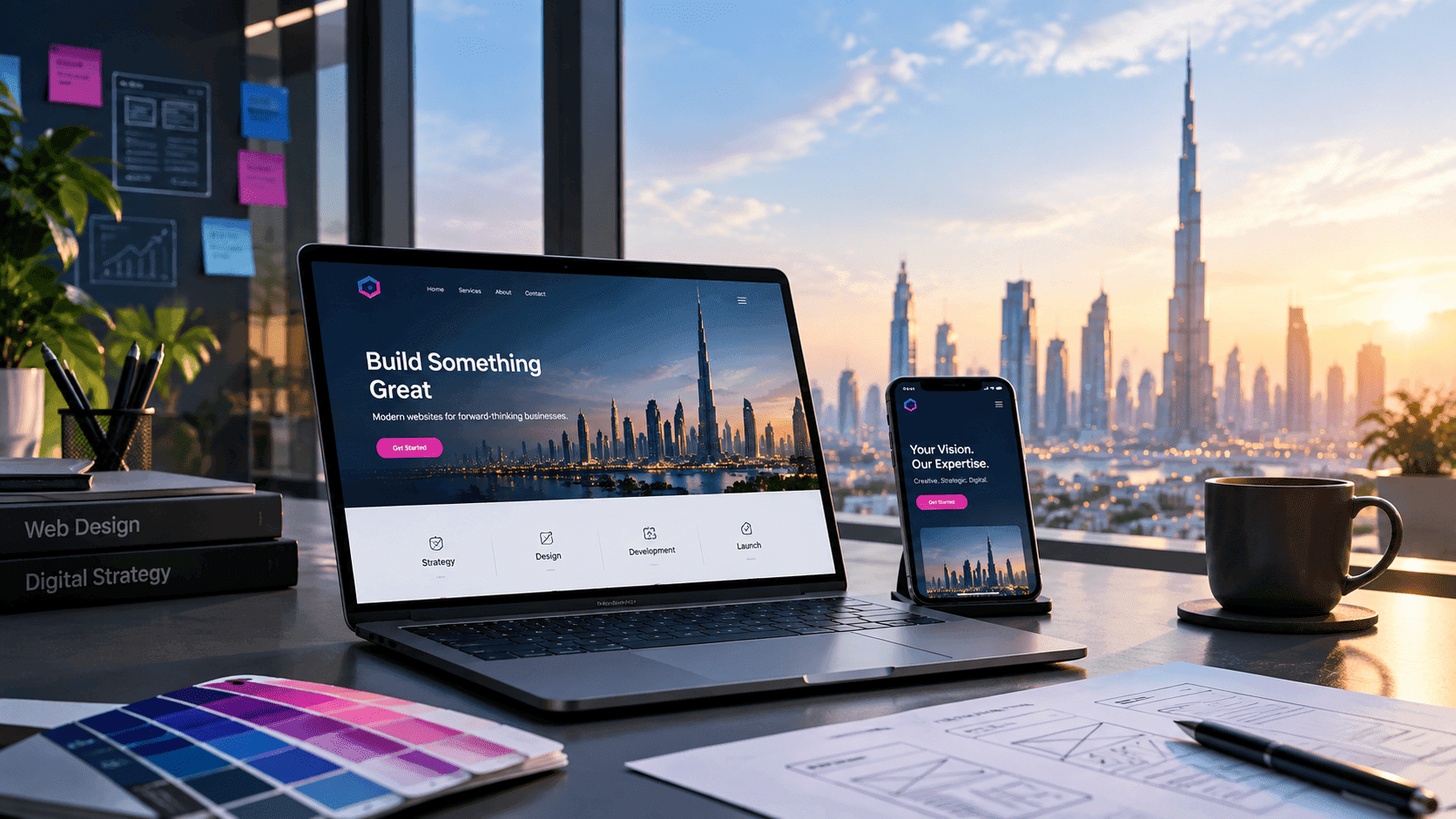
Launching a business website is an important step, whether you’re starting a new company, expanding your online presence or redesigning an existing website. One of the first questions business owners ask is: How long does it take to design, develop and launch a professional website in Dubai?
The answer depends on the website’s size, design requirements, content, functionality and integrations.
A straightforward business website may take approximately 2–6 weeks, while a custom corporate website can require 8–16 weeks or longer. More complex projects involving e-commerce, multilingual content or custom integrations generally need additional time.
Understanding the website development process helps UAE businesses set realistic deadlines, prepare their resources and avoid unnecessary delays.
1. How long does website development take in Dubai?
Estimated website development timelines
Illustrative planning ranges, not guaranteed delivery times.
|
Website type |
Estimated duration |
| Single landing page | 1–3 weeks |
| Small business website | 2–6 weeks |
| Corporate website | 4–10 weeks |
| Custom corporate website | 8–16 weeks |
| E-commerce website | 6–16+ weeks |
| Complex web application | 3–6+ months |
Actual timelines depend on the agreed scope, available resources, content readiness and approval process.
A website with five informational pages and an existing brand identity will usually take less time than a corporate website requiring custom UI/UX design, advanced animations, multilingual content and third-party integrations.
For businesses planning a product launch, exhibition or seasonal marketing campaign, starting website development early is particularly important.
2. The seven stages of professional website development
Stage 1: Discovery and planning
Before designing the website, the project team identifies business objectives, target audiences, competitors, required pages and technical requirements. This stage establishes the website’s structure, scope and delivery milestones.
Stage 2: UI/UX design
Designers prepare wireframes and visual layouts, including typography, colours, navigation and responsive designs. The objective is to create a consistent experience across desktop, tablet and mobile devices.
Stage 3: Content preparation
Website copy, service descriptions, images, videos, testimonials and company information are prepared and approved. Content delays can affect the entire project schedule, so this stage should begin early.
Stage 4: Website development
Developers turn the approved designs into functional web pages, including navigation, forms, animations and mobile-responsive layouts. The duration varies depending on whether the website uses a CMS or requires custom development.
Stage 5: Technical SEO and integrations
Search-friendly URLs, metadata, internal links, sitemaps and relevant structured data are implemented. Analytics, contact forms, CMS features and agreed third-party integrations are also configured.
Stage 6: Testing and quality assurance
The website is checked across browsers, devices and screen sizes. Forms, navigation, accessibility, loading performance and security configurations are reviewed before final approval.
Stage 7: Website launch
Hosting, domain settings, SSL certificates and production deployment are completed. For redesigned websites, existing URLs and redirects should be reviewed to reduce the risk of losing established search visibility.
Some of these stages can overlap. For example, content writing can begin during design, while technical SEO foundations can be implemented throughout development.
3. What affects the website development timeline?
Several factors can influence how quickly a business website can be completed.
Website complexity: A simple informational website requires fewer resources than a platform with customer accounts, booking systems, payment processing or custom functionality.
Design requirements: Custom illustrations, interactive elements, animations and unique page layouts generally require additional design and development time.
Content availability: Having approved text, images, brand guidelines and service information ready can significantly reduce delays.
Multilingual functionality: Arabic and English websites require additional consideration for translation, typography, navigation and right-to-left layouts.
Integrations: Connecting CRM platforms, payment gateways, marketing tools or third-party applications can extend development and testing.
Feedback and approvals: Multiple stakeholders, changing requirements and late-stage revisions can affect the agreed delivery schedule.
4. Is redesigning an existing website faster than building a new one?
Not necessarily.
A website redesign can be quicker when the business already has approved branding, usable content and a clear page structure. However, redesigning an established website requires careful handling of existing search visibility.
Important considerations include preserving relevant URLs, redirecting changed pages, migrating content, retaining metadata where appropriate and checking indexing settings.
For a website that already generates organic traffic, these migration activities should be included in the project timeline rather than treated as last-minute tasks.
5. How to launch your website faster without compromising quality
A faster website launch begins with preparation rather than rushing the development process.
Businesses can reduce avoidable delays by finalising their requirements, preparing content, appointing a decision-maker and agreeing on realistic approval deadlines.
A phased launch can also be useful. For example, a business might initially launch its homepage, core service pages, about page and contact page, then introduce additional features and content after launch.
However, essential testing, mobile responsiveness, security and technical SEO should not be skipped simply to meet a deadline.
6. What happens after the website goes live?
Website development does not end on launch day. The first few weeks are an opportunity to identify issues, monitor performance and understand how visitors interact with the new website.
Post-launch activities may include fixing technical issues, reviewing analytics, monitoring search indexing, updating content, checking security and making usability improvements.
For businesses investing in digital marketing, the website should also support future campaigns through relevant landing pages, conversion tracking and measurable customer journeys.
Frequently asked questions
- Can a business website be completed in two weeks?
A simple website or landing page may be completed within two weeks if the requirements are limited, content is ready and approvals are prompt. More complex projects generally require longer. - Does website development include SEO?
Technical SEO foundations can be incorporated during website development, including page structure, metadata, mobile usability and sitemaps. Ongoing SEO campaigns are a separate activity and require continued work after launch. - How long does an e-commerce website take to build?
A relatively straightforward online store may take 6–12 weeks. Larger stores with complex product catalogues, inventory integrations or custom checkout requirements can take considerably longer. - Will my website appear on Google immediately after launch?
A website can be made accessible to Google at launch, but crawling, indexing and ranking are separate processes. Appearing on Google’s first page is not guaranteed by launching a technically optimised website. - Should I choose WordPress or custom website development?
The appropriate platform depends on your requirements, budget, content management needs and future development plans. A CMS may be suitable for content-driven business websites, while custom development can provide greater flexibility for specialised functionality.
Conclusion
Building a professional website in Dubai is a structured process involving planning, design, content, development, testing and deployment.
While many business websites can be completed in approximately 4–12 weeks, the actual duration depends on their complexity and the readiness of the project team and client.
A realistic timeline allows businesses to launch a website that is not only visually appealing but also functional, accessible, search-friendly and prepared for future growth.